



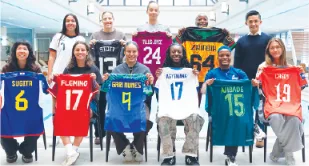
Rasheedat Ajibade’s latest international recognition concerns what happens around football as much as what happens during a match. The Super Falcons captain has been selected for the second cohort of FIFA’s Player Impact Programme, bringing attention to the everyday conditions that allow young women to remain in sport.
PUNCH reported on November 11 that Ajibade is part of a 13-player cohort in a nine-month initiative intended to help footballers develop community projects. Its account connects her participation with the Rash Hygiene Hub, a project under her foundation that provides health education and hygiene support to grassroots female players in Nigeria.
The significance is more specific than another award for a prominent athlete. Community football depends on ordinary essentials: reliable facilities, practical information, safe spaces to raise concerns and adults who take players’ needs seriously. A development discussion focused only on boots, scouting and training sessions can miss the conditions that make those sessions accessible.
Visibility is the beginning of the work
A national-team captain can draw attention to needs that smaller clubs struggle to place on the public agenda. That visibility is valuable, but the harder question is whether it produces support that survives beyond a presentation or a distribution day. Regular access and a clear way to seek help make a different contribution from a single well-publicised event.
There is also a useful distinction between education and treatment. A football project can improve access to information and encourage players to seek qualified support. Its public profile should not be mistaken for evidence that it replaces professional health services. The strongest projects make their scope clear and develop dependable referral relationships where specialist help is needed.
Sports Village Square’s November 10 report describes the FIFA initiative as support for players seeking to turn influence into sustained social change. That gives Ajibade’s selection a practical test: whether training, professional guidance and contacts improve the delivery of the work already associated with her name.
What useful impact reporting would show
The first measure is reach, but reach alone is incomplete. Counting the people who attend a session does not establish how well they understood the material or whether they can obtain help later. A useful account would distinguish participants, repeat participants and the clubs that continue to engage after the initial event.
Another measure is continuity. Grassroots teams often operate through the efforts of a few committed people. If a project relies entirely on the appearance of a famous player, its timetable may become vulnerable to the player’s own professional commitments. Training local coordinators and keeping simple records could make support more dependable, even when international football takes the founder elsewhere.
These are standards for evaluating an initiative, rather than claims about results that have already been achieved. Programme selection establishes an opportunity. It does not, by itself, demonstrate that a particular intervention has improved attendance, reduced absence or changed a player’s health. Those conclusions need evidence gathered over time and with appropriate respect for participants’ privacy.
A wider definition of investment
For Nigerian football, the story broadens what investment can mean. A talented teenager may receive technical coaching yet still face practical barriers to participating consistently. Supporting the person who plays is part of supporting performance, even when the benefits do not appear in the next match’s scoreline.
Clubs and sponsors can contribute by making their commitments precise. An offer of regular supplies, transport or access to qualified expertise can be assessed more clearly than a general promise to empower young women. Defined responsibilities also make it easier for communities to know whom to contact and what level of service to expect.
Ajibade’s selection gives that discussion a prominent Nigerian voice. The durable story is the connection between elite football influence and the less visible work that sustains participation. The next meaningful evidence will concern delivery: what support reaches players, how consistently it reaches them and whether the organisations around them become better equipped to respond.
Discover more from PMNBuzz.com - A PRIME MEDIA NETWORK BRAND
Subscribe to get the latest posts sent to your email.






